
Concrete Sidewalk Building in Simi Valley CA - a walk that drains and stays level
Cracked, lifted or puddled walk? We build a new concrete sidewalk that sheds water away from your house and stays even underfoot.
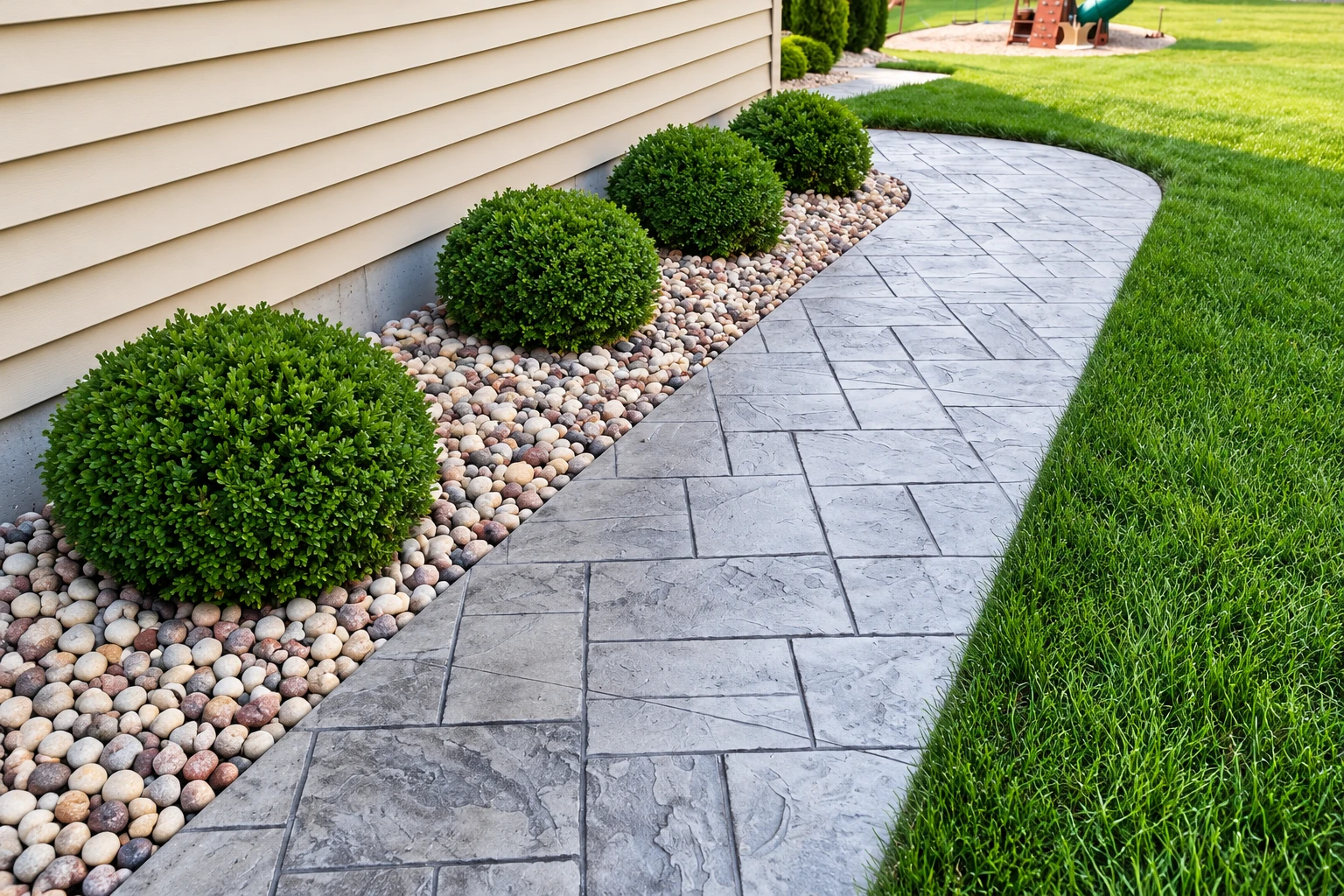
- Licensed and insured.
- Free quotes on site.
- Replies within 1 business day.
What goes into building a new concrete sidewalk in Simi Valley?
Concrete sidewalk building in Simi Valley means forming, pouring and finishing a new walk that meets your doors, curbs, driveway and yard at the right heights and sends water off to the side, not toward the house.
Most people call us when an old walk has lifted, cracked or started holding water, or when they want a new path from the driveway to a side gate or the backyard. The price mostly turns on the walk's size, whether an old walk has to be broken out first with concrete cutting, how many spots a car crosses and how much the yard slopes. The schedule turns on whether a permit is needed and on the cure afterward, so I'll give you a written estimate once I've walked the route and seen what we're working with.
How do you know your walk needs replacing?
Panels lifted at the seams
An edge that sticks up where two panels meet is the kind of thing people catch a toe on, and it usually means roots, washed-out soil or loose fill pushed or dropped one side. Grinding the lip down only buys time, because whatever moved it keeps working underneath.
Water sitting on the walk
Puddles that stay after the sprinklers shut off, or runoff heading for your foundation, mean the slope was never set right or the walk has settled. The longer it goes, the more water soaks the ground under the panels and the faster they shift.
Cracks wandering across panels
Some cracking is normal, but cracks that run across the middle of panels instead of along the joint lines usually point to joints cut late or a base that gave way. Every open crack lets in water and roots, so a walk like that tends to break up faster each year.
How we handle concrete sidewalk building
Before anyone digs, I walk the route with you and we settle the walk's finished height and its side-to-side slope, so it meets your doors, curbs and driveway cleanly and water runs off the edge instead of pooling. We look hard at nearby trees, because roots can move a walk over the years, and at every spot a car will cross, because those sections usually need to be thicker or carry rebar, the steel inside that holds a slab together. Then the crew digs out the topsoil and anything organic, packs the subgrade, which is the ground the walk sits on, sets forms and pours. We give the top a broom finish, a light texture that grips when it's wet, and cut control joints early, grooves that tell the concrete where to crack as it shrinks, because joints cut late don't do their job. The base is the part you'll never see and the first thing people want to trim from a budget, and it's the one place I won't cut, because a nice top on a soft base just settles with the dirt.
A new walk often runs from the driveway to the garage, so if your garage floor concrete is cracked or sunken, it can make sense to plan both together and get the heights right where they meet. If you'd like the walk to look like more than plain gray, decorative concrete such as color or a border can be worked into the same job, and we'll still keep a surface that grips.
Straight broom-finished walk
This suits most front walks and side-yard paths on fairly level ground, where the job comes down to a solid base, a good slope and joints in the right places. It's usually the simplest version to build and the easiest on the budget.
Walks on slopes or past driveways
This suits a walk that drops down a hillside yard, bends around a tree or crosses a driveway, where we may need steps, thickened sections or a different route. These take more figuring and more forming, and honestly they're the jobs I like most.
Get a free on-site estimate for your new walk
We reply within one business day to set a time. I come out, walk the route with you and give you a free written estimate, with no pressure and no obligation.
(805) 261-5009- Based in
- Simi Valley, CA 93065
- Hours
- Mon–Fri: 6 AM–9 PM, Sat–Sun: 8 AM–10 PM
What happens after you call about a new sidewalk?
Here's how a new walk goes from your first call to the day it's ready to use, with me at the start and our crew lead running the work.
Call or send the form
Call (805) 261-5009 or send the form, and we'll set a time for me to come out. A rough idea of where the walk should go is plenty at this stage.
I walk the route with you
I look over the grades, doors, curbs, trees and drainage, ask a lot of questions and then write up an estimate you can hold onto and compare. If something can't be known until we dig, I'll tell you that plainly instead of guessing at a number.
Permit, prep, pour and cure
Once you say go, we sort out any permit with you, and if the walk reaches the public right-of-way, the city's Development Services team checks the plans and lists any conditions before it's approved. Our crew does the prep, pour and cleanup, I check in at the base and the forms, and you keep heavy use off the walk while it cures.
Why Simi Valley homeowners have us build their sidewalks
Licensed and insured in California
California's state licensing board sets a concrete classification that covers flat work like a new walk, and we're licensed and insured. That's worth asking any contractor about before they pour a walk that ties into a city curb or your driveway.
The owner does your estimate
I come out myself to look at the job and give the estimate, and a crew lead runs the work day to day with our crew. You get answers from the person who priced the job, and I'd rather tell you what we don't know yet than guess.
Since 2017, framing before that
We've been in business since 2017, and before that I spent years framing houses, then learned concrete on flatwork and foundation crews, flatwork being walks, patios, driveways and other flat slabs. Jobs that need some figuring, like a walk down a sloped yard or one that has to meet the house just right, are what we're known for.
On a walk, what counts most is the ground under it, and nobody sees that after the pour. Our work is backed by our satisfaction guarantee, so send us the details or call (805) 261-5009 and I'll come take a look.
Sidewalks, driveway crossings and permits in Simi Valley
If your walk ties into the public right-of-way, the city's strip along the street, Simi Valley's Public Works Development Services issues the encroachment permit, which is the city's sign-off to work there. You can apply through the city's online Customer Self Service Portal or call its help line at (805) 583-6786. We'll tell you up front if your walk needs one, and we can pull it as your contractor or help you through it if you'd rather do it yourself.
Most walks we're asked about here run from a driveway to a front door, so there's nearly always a spot where a car crosses, and plenty have a tree that's been working on the old panels for years. We plan those spots first, and we see the same mix of sloped yards and driveway crossings on jobs in Thousand Oaks and Moorpark.
Questions about concrete sidewalks in Simi Valley
How much does a new concrete sidewalk cost in Simi Valley?
In the Los Angeles area, a concrete sidewalk usually costs about $6 to $11 per square foot. That's the area's going rate for the walk itself, not our price, and where yours lands depends on tearing out an old walk, thickened sections at driveway crossings, tree roots and the finish you pick. I'll give you a written figure once I've seen the route.
How long does a new concrete sidewalk take to cure?
For most concrete poured above 40°F, curing should last at least 7 days or until the concrete reaches 70% of its specified strength. Curing is the stretch when new concrete gains its strength, so plan around that week and not just the pour day. We'll tell you what you can and can't do on it while it cures.
What causes a concrete sidewalk to crack or lift?
Most cracking and lifting comes from the ground moving under the walk, from tree roots, expansive soil that swells and shrinks, washout or fill that was never packed. Where the walk runs and how the ground is prepared usually matters more than making the concrete stronger, which is why we spend our time there and cut the joints early as described above.
Do I need a licensed contractor to build a sidewalk in California?
Usually, yes. State licensing board guidance says only minor work under $500 in total contract price, labor and materials included, is exempt from licensing, and not when it's part of a larger project. If someone offers to pour your walk without a license, ask how the job fits under that limit.
What should I ask a concrete contractor before building a sidewalk?
Ask how they'll keep the walk evenly supported where it crosses utility lines and where it meets the driveway, because those transitions are where the support under a slab tends to change. It's also fair to ask what they plan to do about any trees along the route.
Do concrete sidewalks need maintenance after they're poured?
Not much, but the sealant in the movement joints may need replacing from time to time. Those are the flexible gaps left where the walk meets the house, the driveway or another slab so each piece can shift a little on its own.
Other concrete work that ties into a walk
If your walk ends at a garage with a cracked or sunken floor, redoing both together keeps the heights matched where the two slabs meet.
For a front walk that should look like part of the house, color, borders or a pattern can dress up plain concrete without losing grip.
Service areas for sidewalk work near Simi Valley
Custom Simi Valley Concrete is based in Simi Valley, California, and builds walks across the cities around it, including Camarillo and Calabasas. The 12 cities below each have their own page. If your city isn't listed, ask us.
Simi Valley, CA
Get your new sidewalk planned right
Have the walk's rough size, its route, any nearby trees and any driveway crossing in mind when you call, and the first visit gets a lot further.