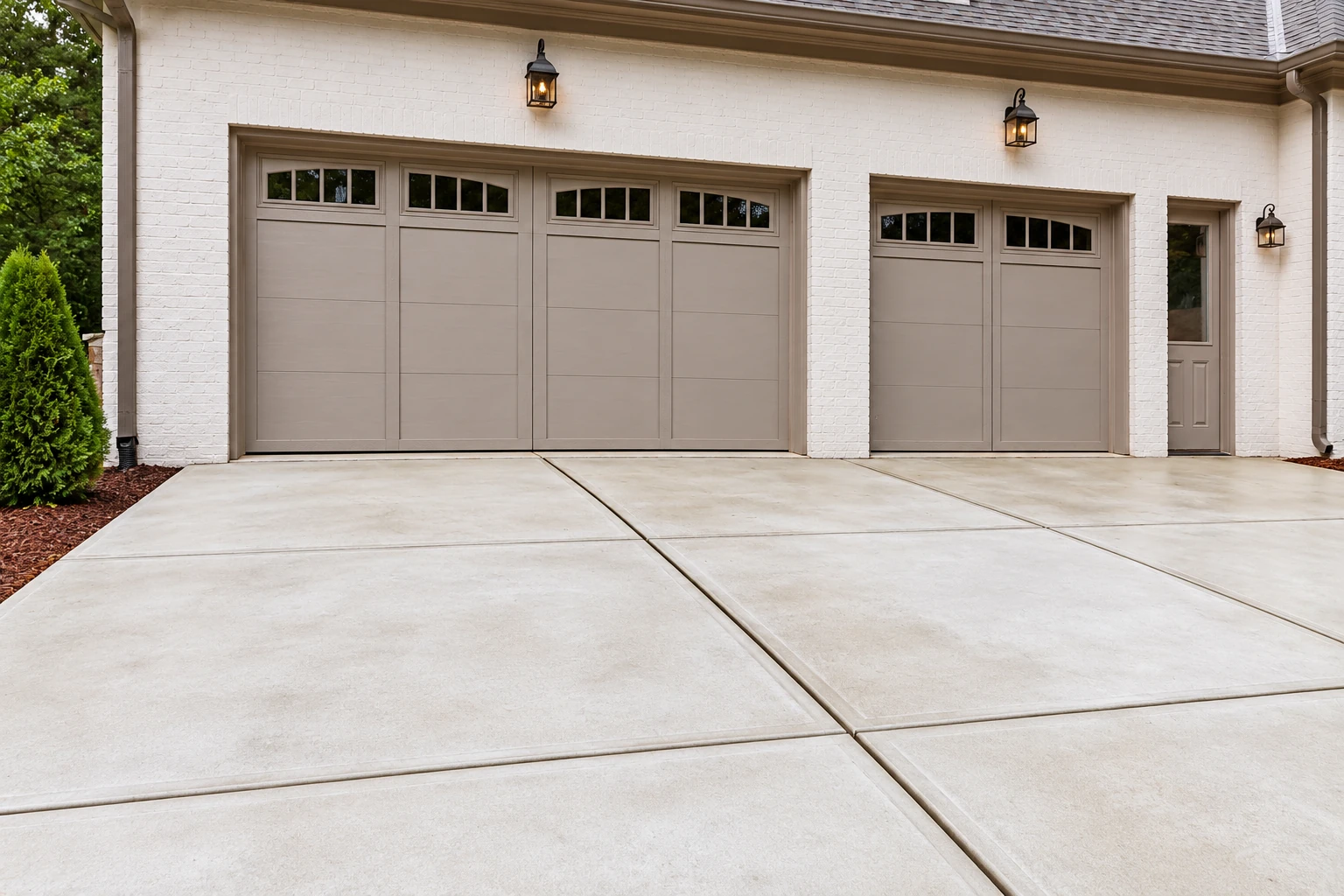
Concrete Driveway Building in Simi Valley, CA - a slab built on a solid, packed base
Cracked, sinking or puddling driveway? We dig out the old base, pack a new one and pour a slab that sends water away from your house.
- Licensed and insured.
- Free quotes on site.
- Replies within 1 business day.
What goes into building a new concrete driveway in Simi Valley?
Building a concrete driveway in Simi Valley means digging out the loose dirt and roots, packing a firm base, then forming, pouring and finishing a slab built for whatever will drive on it. Most of what decides how it holds up gets done before the concrete truck shows up.
Maybe the old driveway is cracked through, sunk at the garage or holding water every time the sprinklers run, and you're trying to decide whether to patch it or start over. The price mostly turns on the size, how much old concrete has to come out, how much digging and base the ground needs, how thick the slab has to be and the finish you pick, since a plain finish costs less than stamped concrete. The schedule turns on the tear-out, any permit for work at the street, the weather on pour day and curing, the stretch after the pour when nobody drives on the slab while it gains strength. I'll look it over and put your numbers in a written estimate, and if a permit is involved, we'll sort it out with you before anyone digs.
How do you know your driveway needs replacing?
Cracks across the slab
A crack running across the driveway, or a web of them, usually means the joints were cut late or skipped, or the ground underneath moved. Left alone, water gets in, the edges chip and the pieces start shifting against each other, which is about when a patch stops making sense.
Sections sinking or tipping
When one section drops at the garage or tips toward the street, the dirt under it was usually raked flat instead of dug out and packed, so it settled. It tends to drop a little more each year, and the lip it leaves is the kind people trip on carrying groceries.
Water pooling after rain
Puddles that sit for hours, or water running toward the garage instead of the street, mean the slope is off or part of the slab has settled. Standing water can work under the edges and soften what's underneath, and a slab that falls toward the house sends that water right where you don't want it.
How we handle concrete driveway building
The first thing I ask is what's going to drive on it, because a delivery truck changes the plan for the slab and the base under it. Then we break out and haul off the old driveway if there is one, dig past the loose dirt and roots to firm ground, and pack a base of crushed rock so the subgrade, the ground the slab sits on, doesn't settle later. We check where the water runs and set the forms so the slab falls away from the house and garage, and we add rebar, steel bars that hold the slab together if it does crack, where the job calls for it. After the pour and finish, we cut control joints, shallow grooves that give the concrete a place to crack where we chose instead of where it wants. If the budget has to give somewhere, I'd rather you save on the finish than on the base, because you can dress up a surface later but you can't fix what's under a slab without tearing it out.
Plenty of driveway jobs grow a little once we're out there. If the backyard needs work too, a concrete patio can be planned alongside the driveway, and if you want the front of the house to look like more than gray, stamped concrete can give the edges or the whole slab a pattern.
Broom finish
A broom finish is a light texture dragged across the wet concrete so tires and shoes keep their grip when it's wet, and it's what most driveways get. It suits you if you want a clean, plain slab and would rather put the money into the base.
Stamped or colored finish
Stamped or colored concrete suits a front yard where the driveway is a big part of how the house looks from the street. It costs more than a broom finish, so when the budget is tight I usually suggest it for a border or the front section and keep the base work as planned.
Get a free written estimate for your driveway
Tell us the driveway's rough size and whether delivery trucks use it. We reply within one business day, and I come out to give you a free written estimate with no obligation.
(805) 261-5009- Based in
- Simi Valley, CA 93065
- Hours
- Mon–Fri: 6 AM–9 PM, Sat–Sun: 8 AM–10 PM
What happens after you call about your driveway?
Here's how a driveway job runs from your first call to the day you park on it again, and who you'll deal with along the way.
Call or send us details
Call (805) 261-5009 or send the form, and we'll set a time for me to come out. It helps to tell us what's there now, bare dirt or an old slab.
I walk the site with you
I look the site over and ask a lot of questions about what parks there, where the water goes and what has to come out. You get a written estimate for the work we talked through, and I'll point out anything I can't price for sure until the old slab is up.
We prep, form and pour
Once you say go, we sort out any permit with you and set the pour date. The crew digs, packs the base, sets the forms and pours, and I check in at the steps that matter most.
Let it cure, then drive
After the finishing, the crew pulls the forms and cleans up, and the slab needs to sit while it cures. Before we leave, I'll tell you when it's safe to walk on and when you can drive on it.
Why Simi Valley homeowners call Custom Simi Valley Concrete for driveways
The owner does your estimate
We're based in Simi Valley, and I come out myself to look at the job and write the estimate. If something can't be known until the old slab is out, I'll tell you that instead of guessing.
In business since 2017
We've run this business since 2017, and before that I framed houses and learned concrete on flatwork crews, the ones pouring driveways, patios and walks, and on foundation crews. That's why the jobs that need some figuring, like a sloped yard or a slab that has to meet the garage just right, are the ones we like.
Licensed and insured for driveways
We're licensed and insured, which matters on a driveway because California requires a contractor license on most jobs this size. It also means you aren't the one carrying the risk if something goes wrong on your property.
When you're ready, send us a few details about your driveway or call (805) 261-5009, and I'll set a time to come out.
Driveways, curbs and city paving rules in Simi Valley
Anything you change at the street, like the apron where the driveway usually meets the curb, is work in the public right-of-way, and the city's Development Services team issues the encroachment permits for it, which are the city's okay to work on public ground. Whether the rest of your driveway needs a permit isn't something I'll guess at, so I'll tell you which city or county office handles it, and we can pull the permit as your contractor or help you pull it yourself. The city has also been looking at how driveways get paved. A city staff report proposed that private driveways to garages at single-family homes be concrete, not asphalt, and it says the city allows some extra front yard paving even if your yard doesn't meet the 50 percent landscape requirement, including a parking strip up to 10 feet wide beside the driveway on the side nearest the property line. A second driveway has to meet Public Works standards for distance and construction, so if you're thinking about one, I'll want to talk it through before we plan anything.
A lot of the driveways we tear out around here are original slabs with a sunk section at the garage or a crack where a joint should have been, and plenty sit on sloped lots where the water has to be steered past the house. We see the same kinds of driveways on jobs in Moorpark and Thousand Oaks, and we handle them the same way, from the base up.
Questions about concrete driveways in Simi Valley
How thick should a concrete driveway be?
A Michigan concrete trade group recommends at least 4 inches, and at least 5 inches where delivery vehicles will drive. That's guidance from another state, not a Simi Valley rule, but it's a sound starting point, so if trucks use your drive, mention it when you ask for a quote.
How long does a new concrete driveway take to cure before I can park on it?
The same Michigan guide says a new driveway can be opened to traffic after 7 days of curing, or sooner if testing shows the concrete is strong enough. Plan on parking on the street or somewhere else for that week, and I'll tell you the day it's ready.
How much does a new concrete driveway cost in Simi Valley?
In California, an installed 4-inch concrete slab, labor and materials included, usually costs about $9 to $18 per square foot. That's the going rate across the state, not our price, and where your job lands depends on the tear-out, how much base work the ground needs, a thicker slab for trucks and the finish you pick. Your own number comes in the written estimate after I see the site.
Does a driveway contractor need a license in California?
Yes, if the job needs a building permit, uses added workers or costs $1,000 or more in labor and materials, which most driveway jobs do. The Contractors State License Board issues the license, and its C-8 Concrete Contractor class covers pavement and flat concrete work. State law also counts building, replacing or improving a driveway at a home as home improvement.
What is the best way to pour a concrete driveway in hot weather?
Pour early and work fast. An Illinois concrete trade group advises early morning pours whenever possible, placing and finishing promptly to limit shrinkage cracks, and dampening the forms and the ground under them before the concrete goes in. We plan summer pours around the heat of the day, so expect the crew to start early and move quickly once the truck arrives.
When can I seal a new concrete driveway?
Not right away. The Michigan guide says a penetrating sealer can be applied 30 days after the pour, and it typically needs reapplying every three to five years.
Other concrete work that pairs with a driveway
If the backyard is still bare dirt or cracked pavers, a concrete patio gives you a level spot for a table and grill that sheds water.
When gray concrete feels too plain for the front of the house, stamped concrete presses a stone, brick or tile pattern into the surface while it's still wet.
Driveway work in Simi Valley and nearby cities
Custom Simi Valley Concrete is based in Simi Valley, California, and takes driveway jobs across the cities around it, including Camarillo and Santa Clarita. The 12 cities below each have their own page, and if yours isn't listed, ask us.
Simi Valley, CA
Get your driveway estimate on the calendar
If the job touches the curb or the street, starting early leaves time to sort out the permit before pour day.